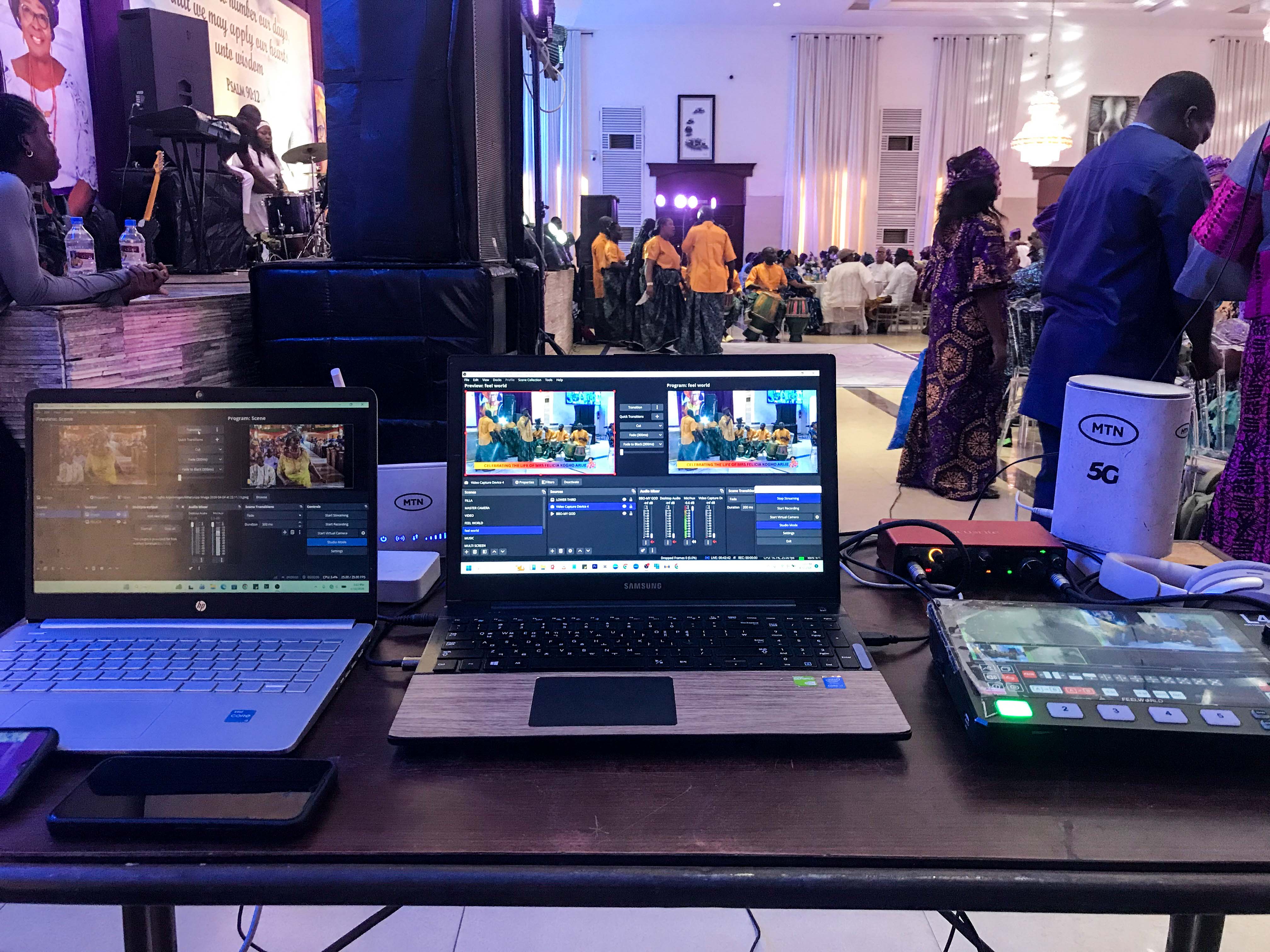
Live streaming has moved from a nice-to-have to an expectation. Whether you're running a church service in Oluyole, a corporate launch at the UI Conference Centre, or a wedding at Kakanfo Inn, guests who can't attend in person expect to watch in real time.
But a bad livestream is worse than none at all. A stream that buffers, drops audio, or points at a wall for twenty minutes tells viewers you didn't plan properly. Choosing the right live streaming service provider is the difference between expanding your reach and damaging your reputation in public.
What a Live Streaming Provider Actually Does
A proper streaming partner handles five things:
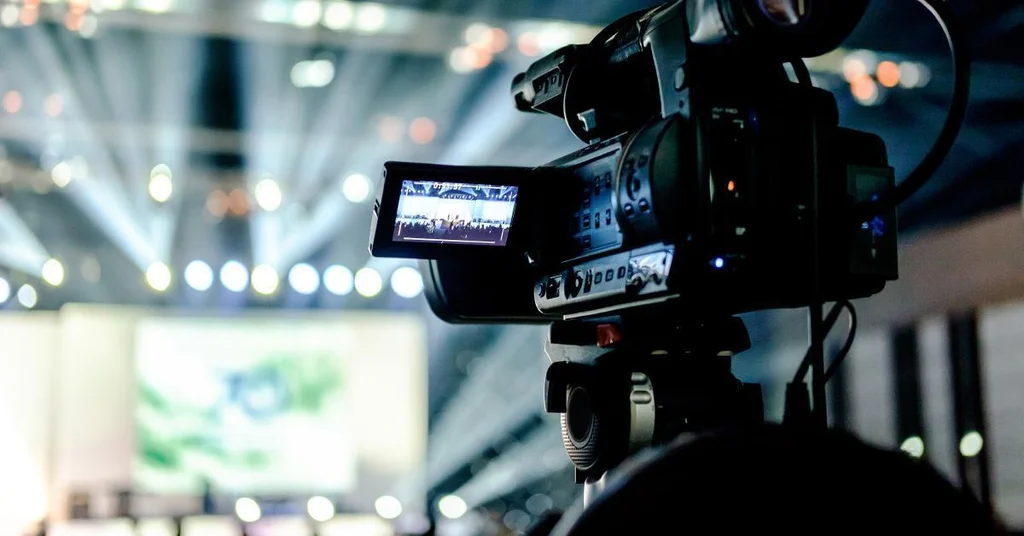
- Camera work. One or more operators capturing the event from multiple angles.
- Audio capture. A direct feed from the sound console — never a camera microphone.
- Encoding. Converting the video signal into a stream your platform can broadcast.
- Uplink. Sending the stream to YouTube, Facebook, Zoom, or a custom platform with reliable internet and a bonded backup.
- Monitoring. Watching the live feed for glitches, dropped frames, or audio issues throughout the event.
If a vendor can't explain how they handle all five, they're not a real livestream provider.
What Separates the Best from the Rest
1. Audio is king
The single most common failure in Nigerian livestreams is bad audio. If the stream is picking up room echo, drums drowning out the speaker, or nothing at all, the production is worthless. The best providers take a direct line-out from the soundboard — not a shotgun mic on the camera.
2. Redundant internet
In Ibadan, no single network is 100% reliable during peak hours. The best providers bond two or three connections — usually a fibre line, a 4G/5G SIM, and a bonded router — so if one drops, the stream stays live. Ask what happens when the primary internet fails. The right answer is not "we'll reload."
3. Multi-camera coverage
A single fixed camera gets boring in three minutes. Two or three cameras — a wide shot, a medium shot of the speaker, and a congregation or audience angle — keep viewers watching. Ask how many cameras the provider uses by default and whether a switcher operates between them live.
4. Platform expertise
YouTube, Facebook, Instagram, Zoom, and custom platforms all have different requirements. A professional provider knows which platform suits your audience, how to set up a scheduled stream, and how to push to multiple platforms at once if needed.
5. On-site monitoring
The stream should never be "set and forgotten." A good provider has someone watching the live output on a monitor throughout the event — checking for dropped frames, audio sync issues, and platform warnings. If problems arise, they fix them quietly while the audience never notices.
What to Expect to Pay in Ibadan
| Service | Typical Range (₦) |
|---|---|
| Single-camera weekly service stream | 40,000 – 80,000 per service |
| Two-camera event stream (3–4 hours) | 150,000 – 300,000 |
| Multi-camera conference or convention (full day) | 350,000 – 800,000 |
| Wedding livestream with dedicated feed | 200,000 – 500,000 |
| Custom platform setup + ongoing support | Quoted per project |
Costs vary by crew size, number of cameras, duration, and whether you need a custom platform or a public one. Some providers offer monthly retainers for churches streaming weekly — usually at a discount.
What to Ask Before You Book
- How many cameras are included, and how many operators?
- How do you handle audio — camera mic or direct from the console?
- What internet setup do you use, and what's the backup?
- Which platforms can you stream to, and can you stream to multiple at once?
- Who monitors the stream during the event?
- What happens if a camera fails mid-stream?
- Can I have the archived recording after the event?
- What's your policy on setup time and technical rehearsal?
Red Flags
- Reliance on phone tethering only. No bonded backup means one dropped call ends the stream.
- No audio feed. If they plan to use a camera mic, the audio will be unusable.
- No on-site monitoring. If no one is watching the stream, no one is fixing problems.
- No rehearsal. A professional provider always arrives early to test the stream before going live.
- Suspiciously low pricing. Full multi-camera production for ₦30,000 isn't possible with real equipment.
- No contract or scope. Everything should be documented — camera count, duration, deliverables, price.
Test the stream before the event
Any reputable provider will do a full technical rehearsal the day before — or at minimum several hours before doors open — so problems surface when they can still be fixed.
The Final Word
The best live streaming service provider in Ibadan isn't the one with the flashiest equipment — it's the one whose stream simply works, every single time. Clean audio, redundant internet, multi-camera coverage, and on-site monitoring are the four non-negotiables.
We produce live streams for churches, weddings, conferences, and corporate events across Ibadan — from single-camera services to multi-day conventions. Get in touch to discuss your event.
Written by
Dmirakulos Production
Editorial
Videographers, live stream producers, drone operators, and LED specialists based in Ibadan, serving clients across Nigeria and beyond.